
Advertising budgets follow attention, and a growing share of buying attention now sits inside retailer websites, apps, and stores. Retail media networks are the machinery retailers built to sell access to that attention. Marketers who once split their working budget between paid search and paid social are now carving out a third line item, often before the fiscal year starts, because the inventory sits closer to the moment a purchase decision happens.
The category is not a niche experiment anymore. Industry tracking counts more than 200 retail media networks worldwide, spread across mass merchants, grocery, pharmacy, home improvement, beauty, and specialty retail. Some are enormous platforms run by global retailers. Others are regional chains or category specialists that quietly built their own ad business on top of customer touchpoints they already owned.
What Are Retail Media Networks?
Retail media networks are advertising platforms that let retailers sell ad space on their digital channels to third-party brands, according to Amazon Ads’ guide to the topic. Broadsign frames them as retailer-owned ad platforms that let brands reach shoppers at the point of purchase. eMarketer’s FAQ, published January 9, 2026, defines a retail media network as an advertising platform owned and operated by a retailer that allows brands to purchase ads. Gartner packages retail website search, display, app placements, in-store assets, and other digital advertising opportunities into the same market.
Four different definitions, one shared idea: the retailer owns the audience, the data, and the ad surface. Brands rent access to all three.
| Source | How the definition reads |
|---|---|
| Amazon Ads | An advertising platform that lets retailers sell ad space on their digital channels to third-party brands |
| Broadsign | Retailer-owned ad platforms that let brands reach shoppers at the point of purchase |
| eMarketer | A platform owned and operated by a retailer that allows brands to purchase ads |
| Gartner | Packaged retail website search, display, app, in-store assets, and other digital advertising opportunities |
That structure is what separates retail media from the ad networks that came before it. A retail media network is tied to a specific retailer’s shoppers, not to a loose bundle of publisher inventory. The advertiser is buying proximity to a transaction, plus the targeting signals the retailer collected while running its own business.
Why Ad Budgets Are Moving Away From Search and Social
The obvious reason is placement. An ad shown on a retailer’s own search results page or product listing reaches someone who is already shopping, already logged in, and already in a buying mindset. Search and social can reach those people too, but they usually have to find them first. Retail media starts with an audience that showed up on purpose.
The second reason is data. Retail media networks are advertising platforms provided by retailers that let advertisers access and use first-party data and inventory. That first-party data comes from actual purchase behavior, loyalty programs, browsing on the retailer’s own properties, and in many cases in-store transactions. Advertisers use it to target, to exclude, and increasingly to measure whether an ad changed what people bought rather than just what they clicked.
The third reason is supply. Every company with customer touchpoints is becoming an ad network now, which is how the category expanded so quickly beyond a handful of giant retailers. Grocers, pharmacies, home improvement chains, beauty retailers, and delivery platforms all sit on shopper relationships that brands want to reach. When those companies open ad platforms, budget that used to be spread thinly across the open web has somewhere more specific to go.
Scale is the final piece. Industry discussion around retail media regularly cites Amazon’s ads business at $56B as evidence of how much advertiser money now flows through retailer-owned platforms. On the technology side, Criteo describes its AI full-funnel ads as reaching 2 billion shoppers beyond search and social, powered by $1T in purchase data. Those are vendor and market claims rather than neutral benchmarks, but they explain the momentum marketers are responding to.
- Purchase intent is built into the environment, not inferred from behavior elsewhere
- Targeting and measurement rely on retailer first-party data instead of third-party cookies
- Inventory keeps expanding as more retailers launch ad platforms of their own
- Reporting can potentially connect ad exposure to sales, depending on the network’s capabilities
On-Site, Off-Site, and In-Store: The Placement Landscape
Retail media networks are commonly categorized by vertical, by technology (on-site and off-site), and by geography, covering both e-commerce and brick-and-mortar footprints. That classification matters because the same network can sell three very different kinds of placements, and each one behaves differently in a campaign.
On-site placements run on the retailer’s own properties: search results, category pages, product detail pages, homepages, and app surfaces. These are the closest thing to a point-of-sale ad in a digital store, and they usually carry the strongest intent signal.
Off-site placements use the retailer’s audience data to reach shoppers on third-party channels, which is why several retail media platforms describe their reach as extending beyond the retailer’s own domain. The advertiser gains scale; the trade-off is that the ad is no longer sitting inside the shopping experience.
In-store placements cover digital assets inside physical locations, which is the part of the category that overlaps with retail digital signage. Gartner’s definition folds in-store assets into retail media, and Broadsign, a digital signage platform, frames the category around point-of-purchase reach. For brands with products on physical shelves, in-store inventory is often the piece that makes a retail media plan feel genuinely new rather than a reallocation of existing digital spend.
| Placement type | Where the ad appears | What the retailer controls |
|---|---|---|
| On-site | Retailer website, app, search results, product and category pages | Inventory, ranking rules, audience data |
| Off-site | Third-party sites, apps, and media reached using retailer audience data | Audience segments and campaign delivery |
| In-store | Digital screens and other in-store digital assets | Store footprint, screen inventory, shopper context |
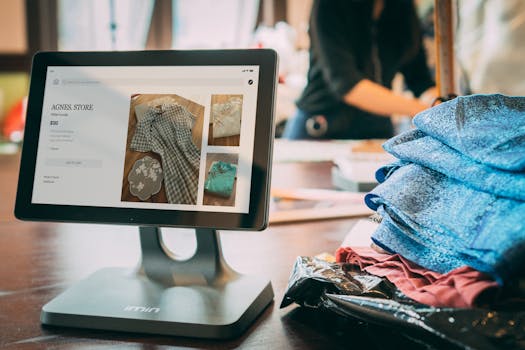
The Retail Media Network Landscape at a Glance
Scale is concentrated at the top. Amazon, Walmart, and Target are consistently described as the networks that dominate on size, while specialty and category retailers such as Home Depot, CVS, and Ulta compete on audience fit rather than raw reach. For many brands, the more interesting question is not which network is biggest but which network holds the shoppers who actually buy their products.
Behind the retail brands sits a technology layer. Criteo and CitrusAd are among the platforms named in market coverage as retail media technology providers, and the category also includes in-store and digital signage specialists. That matters at evaluation time, because a network’s reporting quality, targeting options, and self-serve capability often depend on the tech stack underneath it rather than the retailer’s logo on the login screen.
Geography adds another layer. A network may operate only in e-commerce, only in physical stores, or across both. It may sell nationally or only in the markets where the retailer has stores. Before committing budget, confirm which markets, placements, and audiences a network actually covers rather than assuming the footprint matches the retailer’s brand presence.
| Network category | What it generally covers | Examples named in market coverage |
|---|---|---|
| Mass merchants | High-traffic retail media platforms with broad audience reach | Amazon, Walmart, Target |
| Specialty and category retailers | Narrower audiences tied to a specific category or shopping mission | Home Depot, CVS, Ulta |
| Technology providers | Platforms that power retail media buying, targeting, and reporting | Criteo, CitrusAd |
First-Party Data Is the Real Product
Strip away the ad formats and retail media is a data business. The retailer knows who bought what, how often, and at what price point. An advertiser buying into that network gets access to segments built from that knowledge, which is fundamentally different from targeting an inferred audience on a social platform.
That data advantage shows up in three practical ways. Targeting can be based on purchase history rather than interest signals. Exclusions can keep budget away from people who already bought, or from people who never buy in the category. Measurement can attempt to link ad exposure to sales outcomes rather than stopping at the click.
Not every network delivers all three, and the depth of reporting varies widely. Some platforms offer closed-loop sales reporting tied to loyalty data. Others report impressions, clicks, and attributed conversions with heavier caveats. Privacy requirements also differ by market and by retailer, so consent rules, data-use terms, and permitted targeting must be confirmed with the network and your own legal advisors before campaigns go live.

How to Get Started With Retail Media Networks
A retail media plan does not need to be complicated, but it does need to be sequenced. The order below keeps early spending tied to evidence instead of enthusiasm.
- Start where your products already sell. If most of your volume moves through one retailer, that retailer’s network is the logical first test. If your sales are spread across several chains, pick two and treat the rest as a later phase.
- Confirm what you will actually get. Ask about available placements, targeting segments, reporting granularity, minimum commitments, self-serve versus managed buying, and how quickly campaigns can be changed once live.
- Write your measurement plan before you spend. Decide in advance which metric determines success, whether that is return on ad spend, new-to-brand sales, category share, or incremental lift, and make sure the network can report on it.
- Build creative for the placement, not for the network name. A search ad on a retail site needs a different message than a display unit on a third-party app or a screen in a store aisle. Match the copy to the moment.
- Fund the test properly. Underspending makes results unreadable. Set a budget that gives the campaign enough volume to produce a signal, then hold it steady long enough to compare periods fairly.
- Set a decision date. Agree internally on when you will review results, what would justify scaling, and what would trigger a stop. Without that checkpoint, retail media tests tend to drift for quarters.
eMarketer’s 2026 FAQ on retail media networks focuses specifically on how marketers should allocate budgets, which is a useful signal that the hard question is no longer whether to participate. The hard question is how much of the working budget should move, and how to defend that number when search and social teams push back.
What to Measure, and What to Ignore Early On
Early retail media reporting can be noisy, and the temptation is to judge everything at once. Establish a primary metric, then use secondary metrics to explain it.
- Sales outcomes: attributed sales, return on ad spend, and where available, new-to-brand purchases
- Reach and share: impressions, share of voice on key search terms, and coverage of your category
- Engagement quality: click-through rate and detail page view rate, which show whether the ad attracted the right shopper
- Incrementality: whether sales rose beyond what would have happened without the campaign, when the network can support that analysis
- Retailer-side signals: changes in organic search rank, buy box position, or in-stock rate, which can influence performance as much as the ads themselves
Ignore vanity comparisons between networks in the first few months. Reach figures, click rates, and reported return on ad spend are calculated differently from platform to platform, so cross-network league tables usually mislead more than they inform.
Common Mistakes That Waste Retail Media Budget
The most expensive mistake is treating retail media as a single channel with a single playbook. A search placement on a grocery site and a display unit reached through retailer data are different products with different economics, and one plan cannot cover both well.
The second mistake is neglecting the destination. Retail media drives traffic to a product detail page the retailer controls. If images are weak, copy is thin, reviews are sparse, or the item is frequently out of stock, the ad spend is funding a leaky funnel. Fixing the listing is often cheaper than raising the bid.
The third mistake is running retail media in isolation. Paid search, paid social, organic search, email, and your own website all influence the same shopper. If retail media is measured as a standalone line item, it can look expensive while quietly lifting branded search demand elsewhere. Track the whole picture, not just the network’s dashboard.
The fourth mistake is assuming the category will stay still. New networks keep appearing across verticals, and the 200-plus figure reflects how quickly retailers are commercializing their touchpoints. Review your network mix on a schedule rather than locking into a single platform for years.
Where Retail Media Fits Alongside Your Own Channels
Retail media changes where demand is captured, not whether your own properties matter. Shoppers who see a retail ad often look up the brand afterward, compare on the brand site, and return to the retailer to buy. A slow site, a confusing product range, or thin content all weaken that path.
That is why retail media planning works best when it sits next to SEO, content, and site performance rather than replacing them. The retailer’s channel earns the sale, but your own website, listings, and storytelling earn the consideration that makes the sale possible. Search visibility for your brand terms, clean product data feeds, consistent naming, and accurate availability information all feed the algorithms that decide which products a retail network can profitably promote.
For mission-driven brands, there is also a credibility question. A retail media placement puts your product next to a retailer’s reputation as well as your own. Before scaling spend, confirm the placements you are buying match the values your customers expect from you.
Frequently Asked Questions
What is a retail media network in simple terms?
A retail media network is an advertising platform owned by a retailer that lets brands buy ads on the retailer’s own channels. That can include website search results, display placements, app inventory, and in-store digital assets. Amazon Ads describes the model as retailers selling ad space to third-party brands, while eMarketer defines it as a platform a retailer owns and operates to sell ads.
Which retail media networks dominate the market right now?
Market coverage consistently names Amazon, Walmart, and Target as the networks that lead on scale, while specialty and category retailers such as Home Depot, CVS, and Ulta compete on audience fit. Beyond those names, more than 200 retail media networks operate worldwide across different verticals and geographies, so the best fit depends on where your products actually sell.
Should I move budget out of paid search or social to fund retail media?
Most marketers test rather than switch. Start with a defined budget, a clear measurement plan, and a decision date, then compare performance against the channels you already trust. Budget allocation guidance for 2026 from eMarketer treats retail media as part of a mixed plan, not a wholesale replacement for search and social.
Can smaller or specialty retailers run a retail media network?
Yes, and many already do. The category has expanded because every company with customer touchpoints is becoming an ad network. Smaller retailers typically offer narrower audiences and simpler reporting, which can still be valuable if their shoppers match your target customer. Confirm placement options, minimum commitments, and reporting detail directly with the network before budgeting.
How long before retail media results are meaningful?
It depends on your budget, category, and the network’s reporting cadence, so set the review point before launch rather than after. Retail search campaigns often show early signal because intent is immediate, while off-site and in-store placements usually need more volume. Ask each network what level of spend produces statistically usable reporting.